
Ubud Real Estate: Cultural & Investment Potential
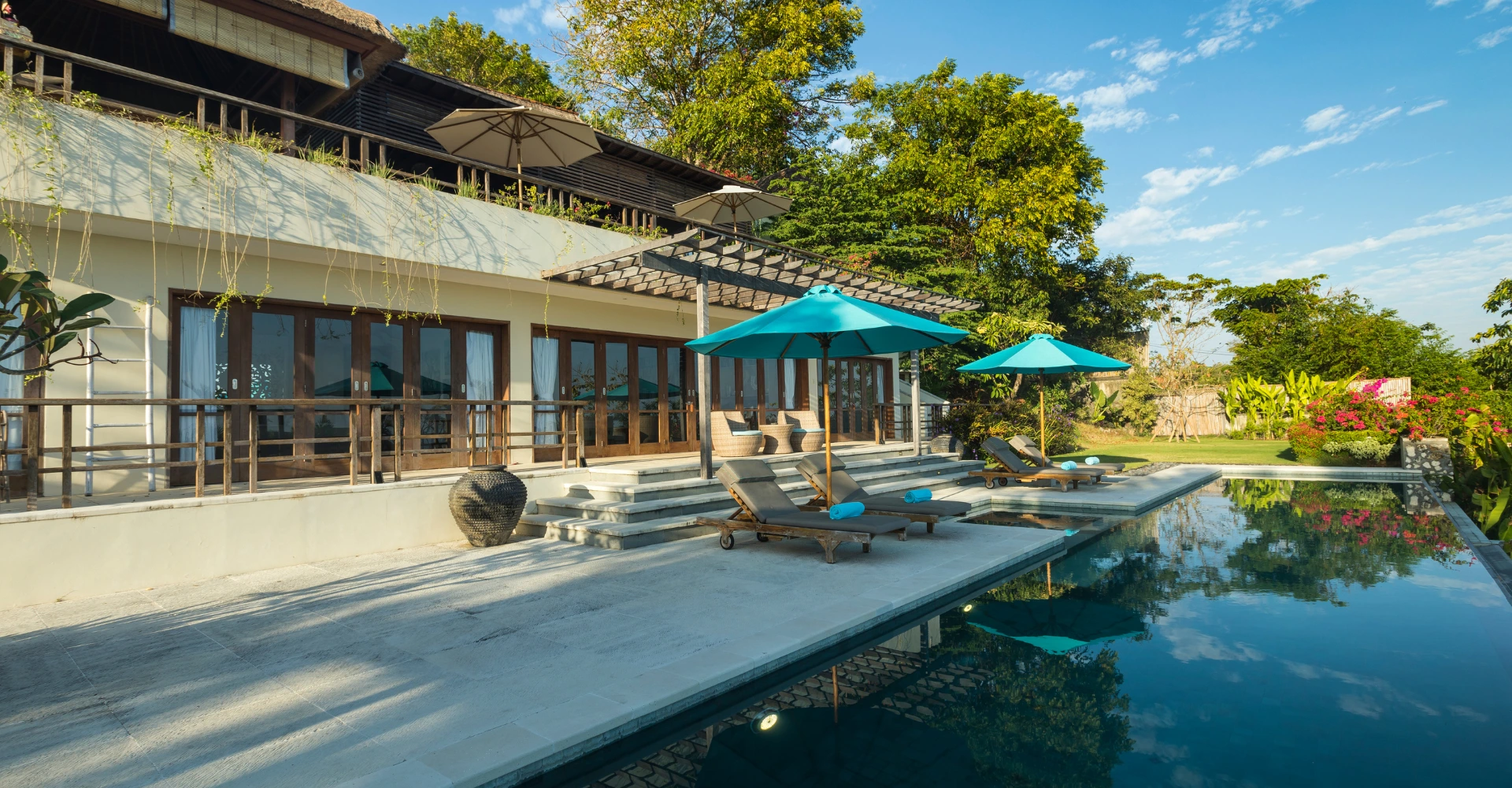
Ubud sits inland in Bali’s hills, away from the beach towns. It’s known for rice terraces, art markets, yoga studios, and a slower pace than Canggu or Seminyak. Most buyers who choose Ubud want quiet mornings and jungle or rice-field views rather than nightlife and beach clubs. It’s also noticeably cooler than the coast – being a few hundred metres above sea level takes the edge off Bali’s heat, which is part of why so many long-term residents settle here.
Property types in Ubud
Most listings here are villas, followed by land you can build on yourself. There’s less commercial and apartment stock than in Canggu or Seminyak, because Ubud isn’t built for high-density living – the local building codes and the surrounding rice-field land keep things low-rise and spread out. A typical Ubud villa on the market is a two- to four-bedroom property on 200-600 square metres of land, often with a private pool. If you want a river-valley or rice-field view, budget more for it: those plots typically cost 20-30% more than similar land set back from the view.
Browse villas for sale or land for sale across Bali, or compare with what’s available in Canggu and Seminyak if a beach town suits you better.
Popular areas within Ubud
Central Ubud, near the Monkey Forest and the main rice terraces, is the most walkable and the most expensive part of town. You’re paying for the ability to walk to cafes, galleries, and yoga studios.
Payangan and Tegallalang, just north of the center, cost noticeably less and still have strong rice-field views, which is why a lot of buyers end up there once they compare prices side by side with central Ubud.
Sayan, to the west, is known for villas overlooking the Ayung river valley – some of the most photographed real estate in Ubud, and priced accordingly.
Penestanan, a short walk from the center up a steep hill, has a quieter, more residential feel while still being close to everything, and tends to sit in the middle of the price range.
Nyuh Kuning and Pengosekan, south of the center near the Monkey Forest’s other side, offer a similar walkable lifestyle at a slightly lower price than the most central streets.
What things cost
Prices move with the market, so treat these as a general guide rather than a quote. Land in the more affordable outer areas (Payangan, Tegallalang) often starts in the low hundreds of millions of rupiah per are (100 square metres), while central Ubud and river-valley land in Sayan can run several times that. A modest two-bedroom villa away from the center might sell in the low-to-mid hundreds of thousands of US dollars; a larger villa with a strong view closer to the center can go well beyond that. The clearest way to get a real number is to compare a handful of current listings in the area you want, since “average” prices can be misleading when the range is this wide.
Who buys here, and rental income
Long-term renters such as digital nomads and retirees, wellness businesses like yoga studios and small spas, and investors building a villa for rental income. Short-term holiday rentals do best close to the center, where tourists want to walk to restaurants and the Monkey Forest; longer-term leases (monthly or yearly) are more common further out in Payangan, Tegallalang, and Sayan, where a lot of the tenants are long-stay digital nomads and remote workers rather than short holidaymakers.
Gross rental yields in Ubud are generally reported in the mid-single digits to low double digits per year, depending on location, how well the property is managed, and whether it’s rented short-term or long-term. Short-term rentals near the center can earn more per night but come with higher management costs and more seasonal swings; long-term leases earn less per month but are more predictable and need less day-to-day management.
Leasehold vs freehold
As with most of Bali, foreign buyers in Ubud almost always buy leasehold, typically 25-30 years with the option to extend. Freehold ownership requires setting up an Indonesian company (PT PMA) or using an Indonesian nominee, both of which carry their own legal risk and cost more to set up than a straightforward lease. Read our leasehold vs freehold guide before you commit to either.
How buying in Ubud actually works
The process is broadly the same as anywhere else in Bali: you find a property, agree a price, and then the legal work starts. A notary (PPAT) checks the land certificate, confirms there’s no dispute or outstanding debt tied to the land, and drafts the sale and purchase agreement. For leasehold, this is a lease agreement registered with the local authorities; for freehold through a PT PMA, you’ll also need to set up the company first, which takes a few weeks. Expect the whole process, from signed agreement to completed transfer, to take anywhere from a few weeks to a couple of months depending on how quickly the paperwork moves and whether a company needs to be formed.
It’s worth using a notary and, ideally, an independent lawyer who isn’t also working for the seller or the agent – due diligence on the land certificate is the single most important step, since disputed or improperly zoned land is the most common way buyers run into trouble in Bali.
Frequently asked questions
Is Ubud a good place to buy property in Bali?
It depends on what you want. Ubud suits buyers looking for a quieter, greener lifestyle and longer-term rental income rather than short-term holiday-let turnover. If you want beach access and nightlife, Canggu or Seminyak are a better fit.
Can foreigners own land in Ubud?
Not directly as freehold. Foreigners typically use a long-term leasehold agreement, or set up an Indonesian company (PT PMA) to hold freehold land. Both routes are legal and common, but they work differently – see our leasehold vs freehold guide for the details.
How much does a villa cost in Ubud?
It varies a lot by area and size. Villas further from the center in Payangan or Tegallalang are noticeably cheaper than similar properties in central Ubud or Sayan with a river or rice-field view. Comparing current listings in your target area is more reliable than any single “average” figure.
Is Ubud good for rental income?
Yes, though the market works differently from the beach towns. Long-term rentals to digital nomads and remote workers are common outside the center, while short-term holiday rentals do best near the Monkey Forest and central cafes and galleries.
-
 How Much Does It Cost to Build a Villa in Bali in 2026?29 Jun 2026
 -
 Is Bali Property a Good Investment in 2026? ROI, Rental Yields & Market Outlook29 Jun 2026
 -
 How Much Does It Cost to Buy Property in Bali in 2026?29 Jun 2026
 -
 10 Common Mistakes Foreign Buyers Make When Purchasing Property in Bali29 Jun 2026
© COPYRIGHT BY VIC RANCI – ALL RIGHT RESERVED.